Overview
Walkthroughs of every example in examples/, grouped by component. Each page explains the code, shows a short screen capture recorded from that example’s Playwright test, and - where available - lets you run it live in your browser.

LLM chat panels - drop-in, tool-augmented, and multi-tab.
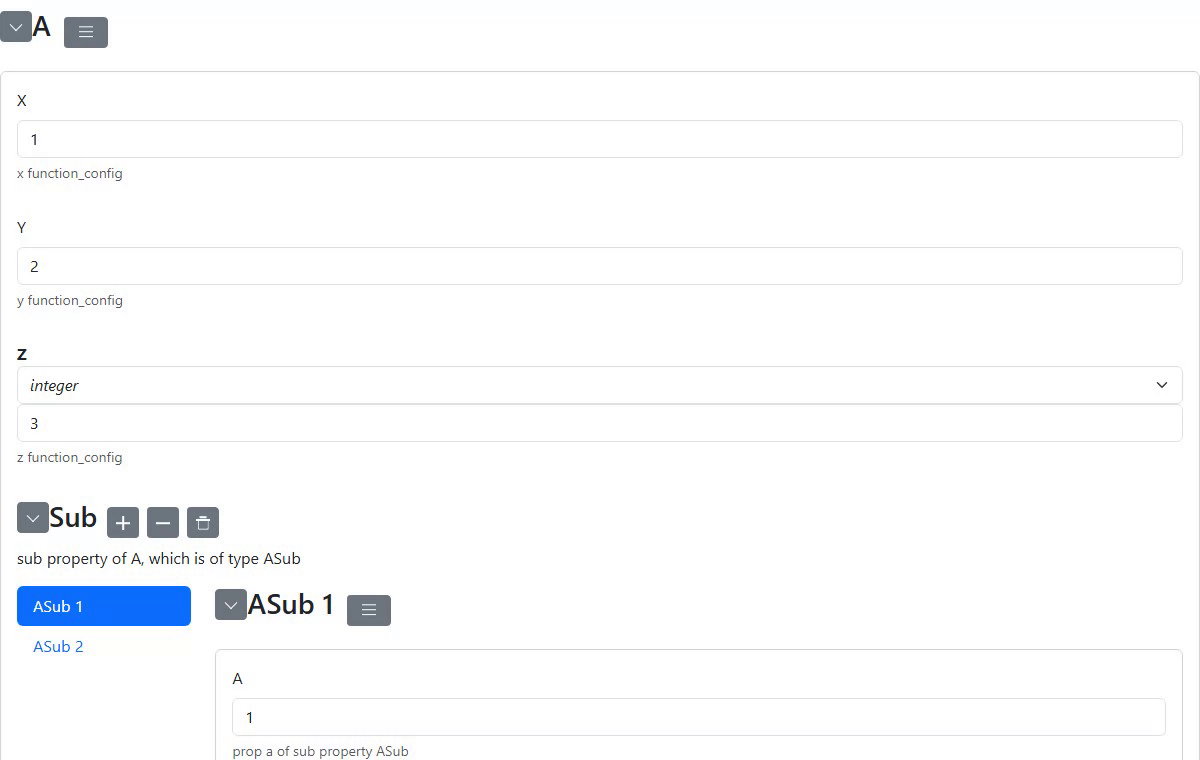
Schema-driven forms, including a Pydantic-backed variant.

Interactive network graphs with context menus and drag interactions.

Trees and tree-grids - columns, checkboxes, lazy loading, drag-and-drop, and more.

Accessible treegrids - cell editors, undo, cross-pane drag, external file drop, lazy loading.
Stream Python stdout and stderr into a live on-screen terminal.

Multi-component highlights - two panels wired together through one shared data model.
Running the examples
git clone https://github.com/opensemanticworld/panelini.git
cd panelini && uv sync
python examples/panels/jsoneditor/jsoneditor_panelini_min.py
Each example ends with pn.serve(...) when run directly - just open the URL printed in the terminal.
Tested end-to-end
Every example under examples/panels/ is exercised by a Playwright test that imports the real module and asserts on rendered DOM. The screen captures are recorded from those same tests, so the docs never drift from the code - see tests/panels/*/examples/.
make test-ui         # UI tests only
make docs-media      # re-record the screen captures